
Vision Changes in Older Adults and Fall Risk: What to Watch For
Vision problems and falls tend to get treated as two separate concerns in caregiving conversations: one belongs to the eye doctor, the other belongs to fall-proofing the house. In reality, they’re much more connected than most families realize. According to research published in JAMA Ophthalmology, older adults with cataracts, age-related macular degeneration, or glaucoma have roughly a 25% to 38% higher risk of falling than those without these conditions, with glaucoma and cataracts at the top of that range. If you’ve already worked through home safety changes or balance exercises with your parent, an overdue eye exam may be the missing piece.
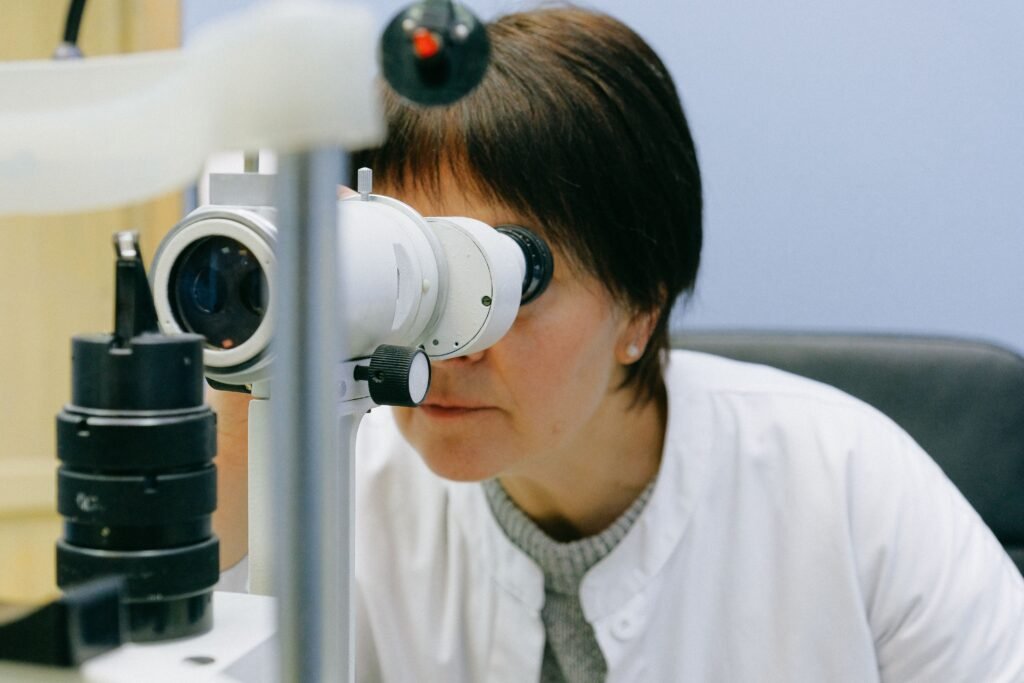
Cataracts, macular degeneration and glaucoma each raise an older adult’s risk of falling by roughly 25% to 38%.
Why vision loss increases fall risk more than people expect
The CDC notes that more than one in four Americans over 65 falls every year, and it’s the leading cause of injury in this age group. Vision plays a much bigger role in preventing those falls than it gets credit for. Vision is one of the key sensory inputs the body relies on for balance and spatial awareness: when it’s impaired, staying upright and steady becomes measurably harder, not just in obvious situations like walking in the dark, but during ordinary daytime movement too.
Several specific mechanisms are at work. Impaired vision makes it harder to judge depth accurately, so a curb, a step, or an uneven bit of sidewalk gets misjudged rather than avoided. Reduced ability to detect and respond to obstacles or changes in terrain means hazards that would normally trigger a quick, automatic adjustment go unnoticed until it’s too late to react. And a fear of falling that develops after vision starts declining can create a cycle of its own: becoming more cautious and less physically confident, which paradoxically can worsen balance and mobility further.
How specific eye conditions affect this differently
Not all vision changes create the same kind of fall risk, which is worth understanding since it affects what to watch for.
Cataracts cloud the lens of the eye, creating an overall haziness that makes it harder to detect hazards clearly, especially in dim lighting or glare: common conditions in hallways, staircases, and parking lots.
Age-related macular degeneration (AMD) damages central vision specifically, affecting the ability to clearly see what’s directly ahead. Even in its early stages, AMD can affect contrast sensitivity (the ability to distinguish an object from its background) which matters enormously for noticing a step edge or a change in flooring that isn’t strongly marked.
Glaucoma gradually damages peripheral vision. This one is particularly sneaky because the brain compensates by filling in what’s missing from peripheral vision, meaning your parent may not consciously notice the loss until it’s fairly advanced: long after it’s already been affecting their ability to see obstacles off to the side.
Diabetic eye disease damages the retina’s blood vessels and can affect vision broadly, compounding whatever other age-related changes are already present, particularly for parents managing diabetes alongside other chronic conditions.
Because glaucoma and early AMD in particular can progress with few obvious symptoms, waiting for your parent to mention vision trouble isn’t a reliable way to catch these: which is exactly why routine screening matters more than symptom-watching here.
Why vision loss and falling compound each other beyond the eye itself
Vision impairment rarely travels alone. Older adults with vision problems often also manage other chronic conditions (diabetes, stroke, heart disease) that independently raise fall risk, and some of the medications used to treat those conditions carry side effects like dizziness or muscle weakness that add further risk on top of the vision issue itself. Vision loss can also lead to social isolation, and isolated older adults sometimes end up taking on physical tasks alone (reaching, climbing, carrying) that they’d otherwise have help with, simply because there’s no one else around to ask.
This is worth keeping in mind alongside the site’s other guides on this topic: if your parent is already working through balance exercises or a home safety review, an unaddressed vision problem can undercut the benefit of both, since neither balance training nor decluttering a hallway fully compensates for genuinely impaired vision.
What actually helps
Get an annual dilated eye exam. This is the single most consistently repeated recommendation across eye health and fall-prevention sources, and for good reason: a dilated exam can catch glaucoma, AMD, diabetic eye disease, and cataracts well before your parent notices symptoms severe enough to mention on their own.
Don’t dismiss “early stage” as “not a problem yet.” Even mild, early vision loss raises fall risk, partly because your parent hasn’t yet developed compensatory habits for a problem they may not fully realize they have.
Review lighting throughout the home, particularly on stairs, in hallways, and at entryways: since reduced contrast sensitivity and general vision haziness both make dim or uneven lighting considerably more hazardous than it would be for someone with normal vision.
Address glare specifically. Cataracts in particular make glare from windows, glossy floors, or bright overhead lighting genuinely disorienting rather than just mildly annoying: adjustable window coverings and non-glossy flooring or rugs can help meaningfully.
Ask the doctor directly about medication side effects like dizziness, especially if your parent is managing a chronic condition alongside a vision problem: this is a case where addressing one risk factor without checking the other leaves a real gap.
Treat vision correction as part of fall prevention, not a separate errand. If cataracts are diagnosed, surgery is generally quick and highly effective, and reframing it as directly protective against falls, not just an inconvenience to schedule eventually, tends to motivate follow-through better than framing it purely around vision quality.
The bottom line
An overdue eye exam is one of the more overlooked levers in fall prevention, precisely because the two issues get filed under different categories mentally. If your parent hasn’t had a comprehensive dilated eye exam in the past year (particularly if they’re also working on balance, mobility, or home safety changes) it’s worth moving to the top of the list rather than treating it as routine maintenance that can wait.
Sources: CDC: About Vision Impairment and Falls Among Older Adults, AARP: Eye Diseases, Vision Loss and Fall Risk in Older Adults, JAMA Ophthalmology: Eye Diseases and Fall Risk (2024), CDC: Older Adult Falls Facts






4 Comments