
Bathroom Safety Checklist for Aging Parents (Beyond Grab Bars)
If you’ve already read our guide on general home safety, you know grab bars are step one. But the bathroom deserves special attention. CDC research on bathroom injuries found that about two-thirds of them happen in or around the tub or shower, and injuries near the toilet climb steeply with age. That’s because the bathroom combines hard tile, water, and the two most balance-challenging movements a person does all day: sitting down and standing up.
Free printable: download our Home Safety Checklist for Aging Parents (PDF) and walk through the house room by room. It takes about 20 minutes.
So if you’re only going to fully “safety-proof” one room in your parent’s home, make it this one. Here’s what actually matters, beyond the grab bars you’ve probably already thought of.
About two-thirds of bathroom injuries happen in or around the tub or shower (CDC).
Why the bathroom is uniquely dangerous
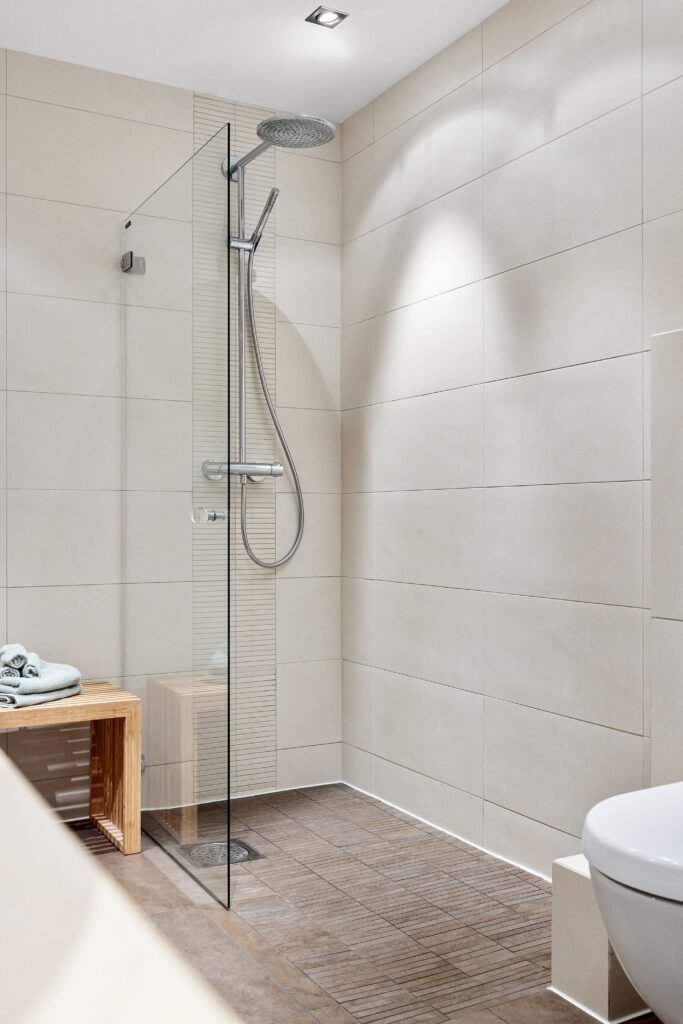
Three things stack up against older adults in the bathroom that don’t apply the same way anywhere else in the house. The floor is hard (tile or vinyl over concrete, unlike carpeted bedrooms), it’s frequently wet, and the two main fixtures (the toilet and the tub or shower) both require a controlled sit-to-stand or step-over motion, exactly the kind of movement where balance and grip strength matter most. Add in that bathroom visits often happen at night, half-asleep, without full alertness, and the risk compounds.
The checklist, room by room
At the toilet:
- A raised toilet seat (adds 3–5 inches of height) makes standing up dramatically easier and takes real strain off the knees and hips.
- Grab bars mounted into wall studs on at least one side: never towel bars, which are not rated to bear body weight and can pull straight out of the wall under stress.
- A bedside commode is worth considering if the bathroom is far from the bedroom and nighttime trips are frequent.
In the shower or tub:
- A shower chair or bench removes the need to stand on a wet surface for the entire shower.
- A handheld showerhead lets someone shower seated without needing to stand and reach.
- Non-slip strips or a rubber-backed bath mat inside the tub itself, not just outside it. Many households have a mat on the floor but nothing inside the tub, which is where the actual slipping happens.
- A grab bar mounted vertically at the entry point of the shower or tub, positioned for gripping while stepping over the edge, in addition to one inside for stability while seated or standing.
On the floor:
- Replace any bath mat with a rubber-backed, non-slip one, and skip decorative mats with curling edges entirely.
- Wipe up water immediately rather than letting it air-dry: a habit worth mentioning gently to your parent, since it’s often overlooked simply because they’ve done it the same way for decades without incident.
Lighting and access:
- A nightlight that activates automatically after dark, so a middle-of-the-night bathroom trip never happens in full darkness.
- A light switch reachable from the doorway, not one that requires walking further into the room first.
- Keep a phone or a medical alert device within arm’s reach of the toilet and shower: falls that happen alone, with no way to call for help, are the ones with the worst outcomes.
Door and space:
- If the bathroom door swings inward, consider whether it could be blocked if someone fell against it: a door that swings outward, or one with removable hinges, means help can always get in during an emergency.
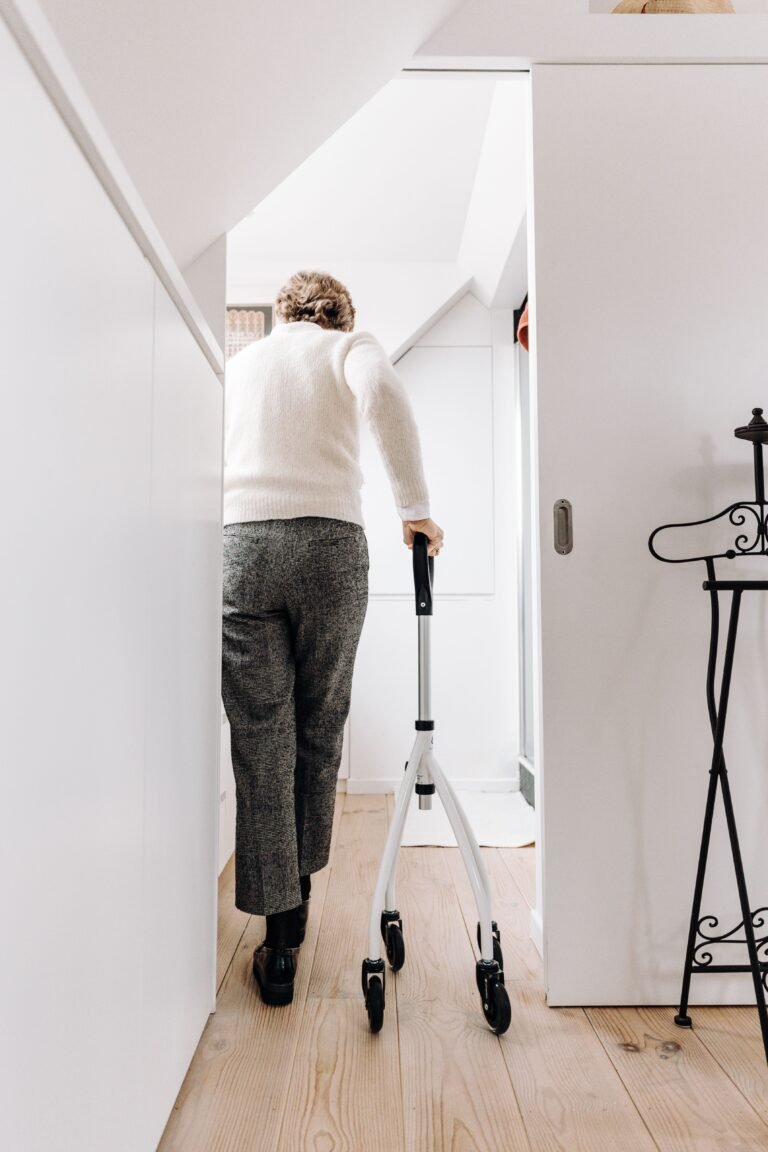
- Clear enough floor space to allow using a walker or cane inside the bathroom itself, not just in the hallway leading to it.
A note on cost and priority
Not everything on this list needs to happen at once, and not everything is expensive. Non-slip mats, a nightlight, and moving a phone within reach cost almost nothing and take an afternoon. Grab bars professionally installed into studs typically run $150–$300 including labor. A raised toilet seat or shower chair is usually $30–$80. If budget or time is limited, start with grab bars at the toilet and shower, a rubber mat inside the tub, and a nightlight: those three changes address the highest-risk moments with the lowest cost.
Bringing it up without a fight
Suggesting bathroom modifications can land badly if it feels like you’re announcing your parent is “getting old” or losing independence. Framing it as something practical rather than something diagnostic tends to go over better: “I read that most home falls happen in the bathroom because of the wet floors: I’d feel better if we put in a couple of grab bars, just as a precaution, not because anything’s wrong.” Most people accept precautionary framing far more easily than framing that implies decline.
If your parent resists outright, sometimes it helps to point out that these are the same modifications used in hotels, gyms, and public buildings for everyone, not just older adults: grab bars in bathrooms have simply become standard safety design, not a marker of frailty.
Sources: UCLA Health: How to Prevent Falls in the Bathroom; CDC: Facts About Falls, CDC MMWR: Nonfatal Bathroom Injuries




2 Comments