
How to Childproof (Parent-Proof) a Home for Dementia Safety
If your parent has been diagnosed with dementia or Alzheimer’s, the home safety approach covered in our general falls-prevention guide isn’t quite enough: dementia introduces a specific category of risk that has nothing to do with balance or grip strength and everything to do with judgment, memory, and awareness of danger. This is genuinely closer to childproofing a home than typical senior-proofing, and it’s worth treating it as its own project.
Dementia can affect that recognition itself, which means safety measures need to prevent access to hazards entirely, not just make hazards easier to handle safely.
The core difference dementia makes
A person without cognitive impairment who might struggle physically still generally recognizes danger: a hot stove, a sharp knife, a door that shouldn’t be opened. Dementia can affect that recognition itself, which means safety measures need to prevent access to hazards entirely, not just make hazards easier to handle safely. That’s the shift in thinking behind everything on this list.
Kitchen safety
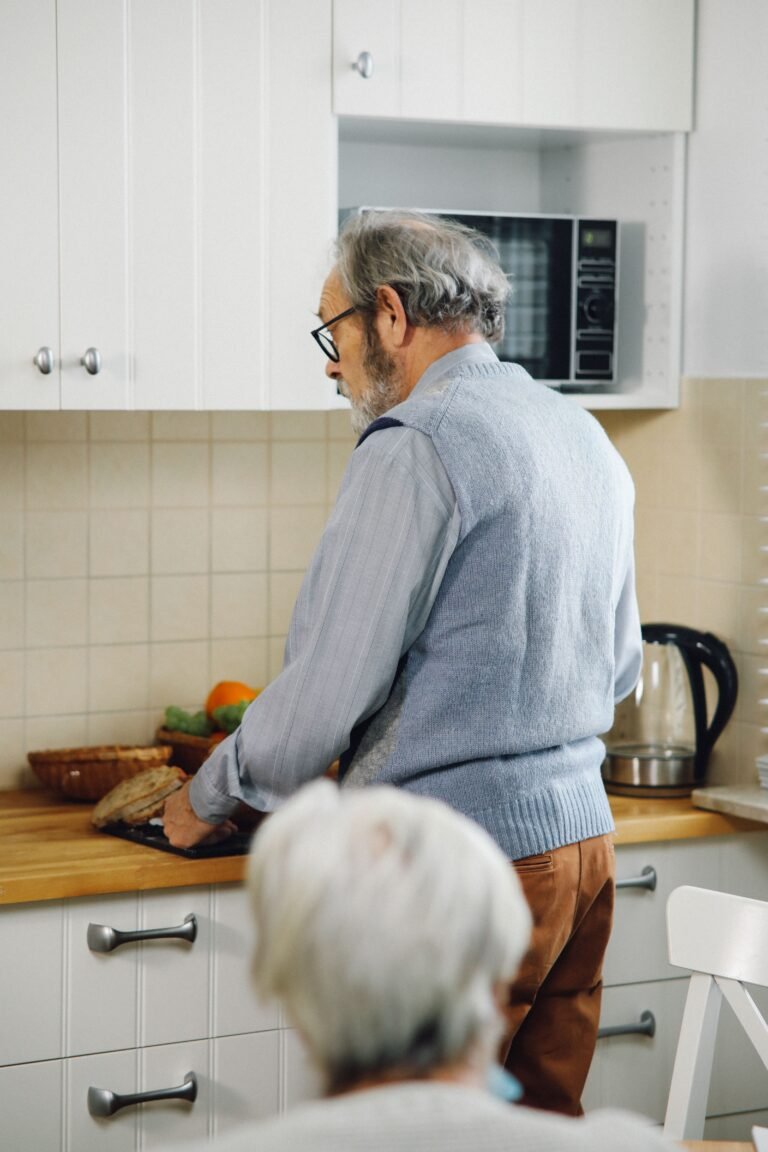
The kitchen contains some of the highest-risk hazards in a dementia-affected home. According to the Alzheimer’s Association, appliances with an automatic shut-off feature reduce fire risk significantly. For stoves without this feature, stove knob covers, removable knobs, or a shut-off valve for the gas line when the kitchen isn’t in supervised use are worth installing. Disconnecting or securing the garbage disposal prevents a common source of injury from someone reaching in without understanding the danger. Sharp knives, toxic plants, and any medications stored on counters should be moved out of the kitchen entirely, not just relocated to a higher shelf.
Medication safety
Medications should be kept in a locked drawer or cabinet, not simply out of easy reach: dementia can affect judgment about what’s safe to take and how much, in ways that a locked cabinet addresses more reliably than placement alone. A daily pill organizer or checklist, ideally managed or checked by a caregiver, helps prevent both missed doses and accidental double-dosing, which becomes a real risk once medication timing is hard to track independently.
Wandering prevention
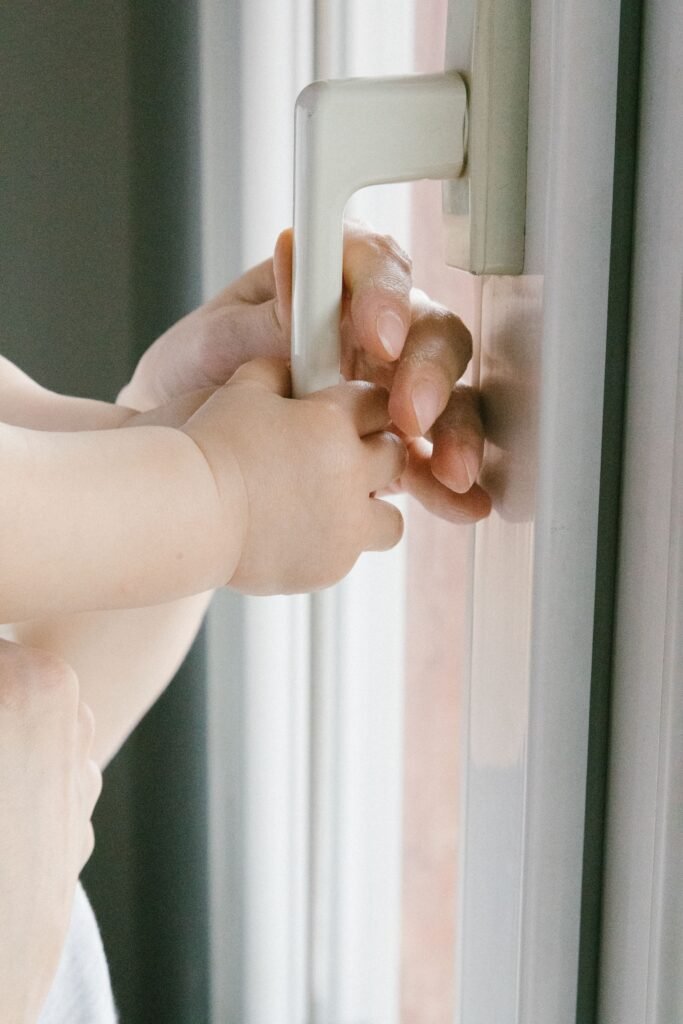
Wandering is one of the most serious dementia-specific safety concerns, since it can lead to a person leaving the home unsupervised and becoming lost, disoriented, or exposed to weather or traffic hazards. Door locks placed out of typical sightlines: a latch or deadbolt positioned notably above or below normal eye level, rather than at the standard door handle height: are a commonly recommended, low-cost step, since dementia can affect the instinct to look outside the usual range for door mechanisms. Keep a spare key hidden nearby for caregivers, since a determined family member locked out during an actual emergency creates its own danger. For higher wandering risk, a medical alert device with GPS location tracking or a door alarm that alerts a caregiver when opened adds another layer of protection beyond the lock itself.
Temperature and water safety
People with dementia can lose the ability to reliably distinguish dangerously hot water from safe water, which makes scalding a real risk that’s easy to overlook. An automatic water thermostat or anti-scald device installed on the water heater or specific faucets addresses this directly, removing the need for the person to judge temperature correctly themselves.
Bathroom-specific additions
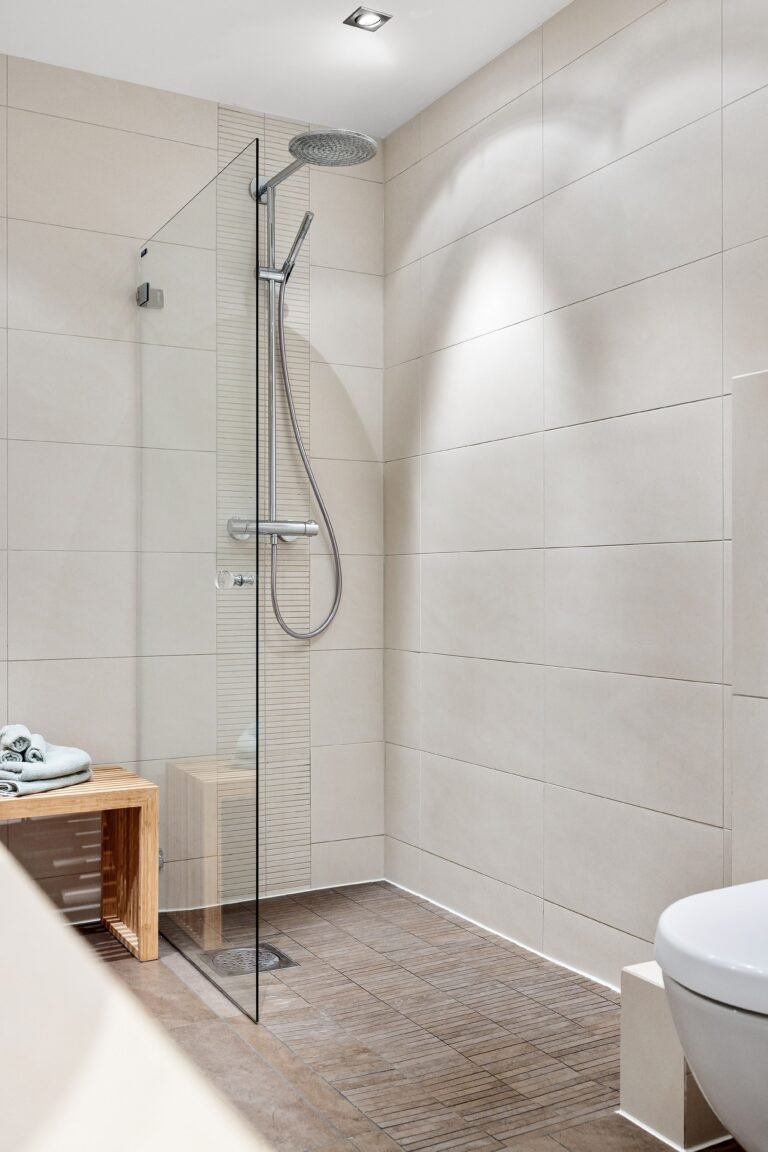
Beyond the general bathroom safety changes covered in our other guide (grab bars, non-slip surfaces), textured safety stickers on especially slippery surfaces add another layer of traction specifically useful when balance and awareness are both affected simultaneously.
Chemical and cleaning product storage
Cleaning products should be stored in their original, clearly labeled containers (never transferred to unlabeled bottles) and kept secured, ideally in the laundry room or a locked cabinet rather than under the kitchen or bathroom sink where they’d be in easy reach during everyday activity.
Lighting
Well-lit walkways throughout the home, plus night lights in hallways and bathrooms, reduce the disorientation that often worsens in low light for someone with dementia: this addresses both fall risk and the confusion that can trigger agitation or wandering behavior after dark, a pattern sometimes called “sundowning.”
Firearms
If firearms are present in the home, removing them entirely or storing them unloaded in a locked cabinet, separate from ammunition, is worth addressing directly and early: this is a conversation some families find uncomfortable, but it’s a serious and specific risk once judgment and memory are affected.
The balance this all requires
The Alzheimer’s Association is explicit about something worth keeping in mind through all of this: safety measures should be balanced against your parent’s remaining independence and social engagement, not treated as a reason to restrict everything possible. The goal isn’t to eliminate all activity or turn the home into something clinical: it’s to remove the specific hazards that dementia makes newly dangerous, while preserving as much of your parent’s normal routine, dignity, and participation in daily life as safely possible.
Start with the highest-risk items first
If this list feels overwhelming to tackle all at once, prioritize in this order: medications (locked cabinet), stove/kitchen fire risk, door locks for wandering prevention, and water temperature safety. These four address the risks with the most serious potential consequences, and the rest can follow over the following weeks as time and budget allow.
Sources and further reading
- Alzheimer’s Caregiving: Home Safety Tips (National Institute on Aging)
- Home Safety (Alzheimer’s Association)


3 Comments