
Smart Fall Detection Sensors: The No-Wear Option Most Families Don’t Know About
If your parent refuses to wear a medical alert pendant or smartwatch, and it’s an extremely common refusal, whether out of pride, forgetfulness, or simply finding it uncomfortable: that doesn’t mean fall detection is off the table. A newer category of ambient, no-wear sensors mounted on a wall or ceiling can detect a fall without your parent wearing, charging, or even remembering the device exists. It’s a genuinely different approach worth understanding on its own terms, not just as a backup plan for when the wearable idea fails.
About 14 million older adults report falling every year, and once someone has fallen once, the likelihood of a second fall roughly doubles.
Why this matters as much as it does
According to the CDC, about 14 million older adults report falling every year, and more than a million of those falls require hospitalization. The risk compounds over time, too: once someone has fallen once, the likelihood of a second fall roughly doubles. That combination is exactly why fast detection matters so much: the sooner someone is found after a fall, the better the outcome tends to be, especially for a parent who lives alone or spends significant time alone during the day.
How ambient, no-wear sensors actually work
Rather than relying on an accelerometer worn on the body, these systems mount low-energy radar or infrared sensors on a wall or ceiling in rooms where your parent spends the most time: commonly the bedroom, bathroom, and living room. The sensor tracks posture and movement patterns in the room itself, and is designed to recognize the specific movement signature of a fall: a rapid, uncontrolled drop toward the floor followed by a period of no movement, rather than a normal sit-down or bend-over motion.
The genuine advantage over a wearable is exactly what it sounds like: there’s nothing to put on, nothing to charge nightly, and nothing your parent has to remember. For a parent who has flatly refused a pendant, taken off a smartwatch and left it on the nightstand, or simply forgets to wear either one consistently, a wall-mounted sensor keeps working regardless of what your parent does or doesn’t remember to do that day.
Privacy is also a meaningful part of the pitch for this category. Many ambient systems specifically use radar or infrared rather than a camera, which means the system can detect a person’s posture and movement without capturing actual video or images: a real consideration if your parent (understandably) doesn’t want a camera pointed at them in their bedroom or bathroom.
Where these systems fall short
No fall detection system, wearable or ambient, is foolproof, and it’s worth going in with realistic expectations rather than assuming any device will catch every fall. Detection technology generally performs best with sudden, hard falls: a rapid, uncontrolled drop is a clear signal. It performs less reliably with a slow slide to the floor, a gradual slump, or a controlled lowering that doesn’t produce the sharp motion signature the system is trained to recognize. This limitation applies to wearables and ambient sensors alike, so it’s not a reason to prefer one over the other: just something to understand about the category as a whole.
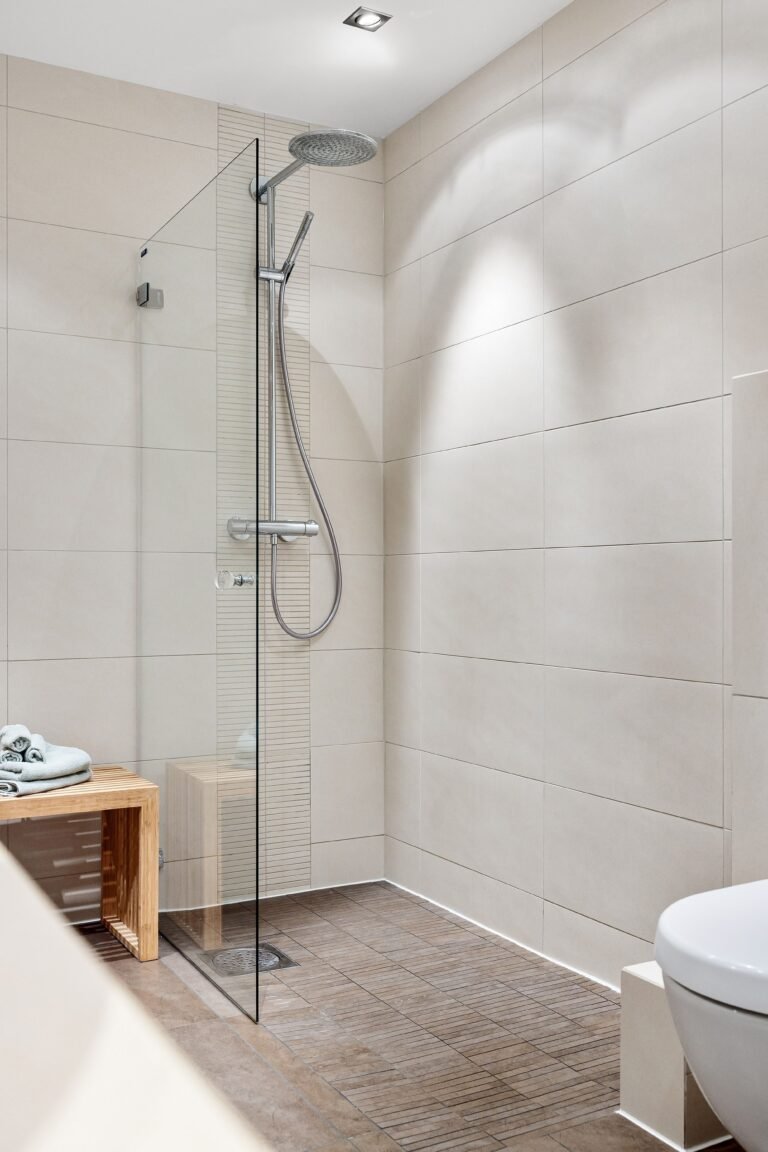
Placement and setup quality matter significantly for ambient systems specifically, since the sensor can only detect what happens within its coverage area. A fall in a room without a sensor, or in a blind spot within a covered room, won’t be detected at all: which means covering just one room (say, only the bedroom) leaves real gaps if your parent spends meaningful time elsewhere in the home.
What it costs, compared to the alternatives
As of 2026, no-wear ambient sensors typically run from around $227 and up as an upfront equipment cost, generally without an ongoing monthly monitoring fee: a notably different cost structure than the wearable medical alert category. For comparison, monitored wearable systems with 24/7 professional response typically run $19.95–$45 a month, often with fall detection added on for another $5–$10 a month, while standalone fall-detection smartwatches without monitoring run $249–$799 upfront. Ambient sensors sit in an interesting middle position: a real upfront cost, but no recurring fee, and no professional monitoring center unless you pair it with one separately.
That last point matters for how you set expectations: many ambient systems are designed to send an alert directly to a family member’s phone rather than to a monitored response center, so it’s worth confirming exactly who gets notified, and how, before relying on one as your parent’s primary safety net.
Who this actually fits
Ambient, no-wear sensors make the most sense for a parent who has actively refused to wear a pendant or watch, who forgets to wear one consistently, or who is specifically uncomfortable with a camera-based option and wants a privacy-preserving alternative. They’re a weaker fit for a parent who spends a lot of time outside the home, since the sensor only protects the rooms it’s actually installed in: a wearable travels with your parent to the grocery store or a walk around the block, and an ambient sensor doesn’t.
For many families, the most realistic answer isn’t choosing one category over the other, but recognizing that they solve different pieces of the same problem: an ambient sensor for reliable in-home coverage without relying on your parent’s cooperation, and a wearable for anywhere outside the home. If your parent already has one but keeps forgetting or refusing to wear it, an ambient system for the highest-risk rooms (bathroom and bedroom especially) is a practical way to close that gap rather than starting over from scratch.
Sources: SafeHome.org: Best Medical Alert Systems with Fall Detection in 2026, Age Safe America: How AI-Powered Fall Detection Devices Work in 2026, Senior Safety Reviews: Best Fall Detection Systems 2026, CDC: Older Adult Falls Facts





2 Comments