
Simple Balance Exercises to Help Prevent Falls in Older Adults
If you’ve already made the home safety changes covered in our other guide (grab bars, better lighting, clearing trip hazards) there’s a second piece of fall prevention that matters just as much and gets talked about far less: the muscles and reflexes that keep your parent steady in the first place. More than one in four adults 65 and older falls each year, and falls lead to about 4.5 million emergency room visits a year among older adults, according to the CDC. The good news is that balance, like any other physical skill, responds to regular practice, and the exercises that make the biggest difference take only a few minutes a day and require no equipment.
Free printable: download our Home Safety Checklist for Aging Parents (PDF) and walk through the house room by room. It takes about 20 minutes.
More than one in four adults 65 and older falls each year, and falls lead to about 4.5 million emergency room visits a year among older adults, according to the CDC.
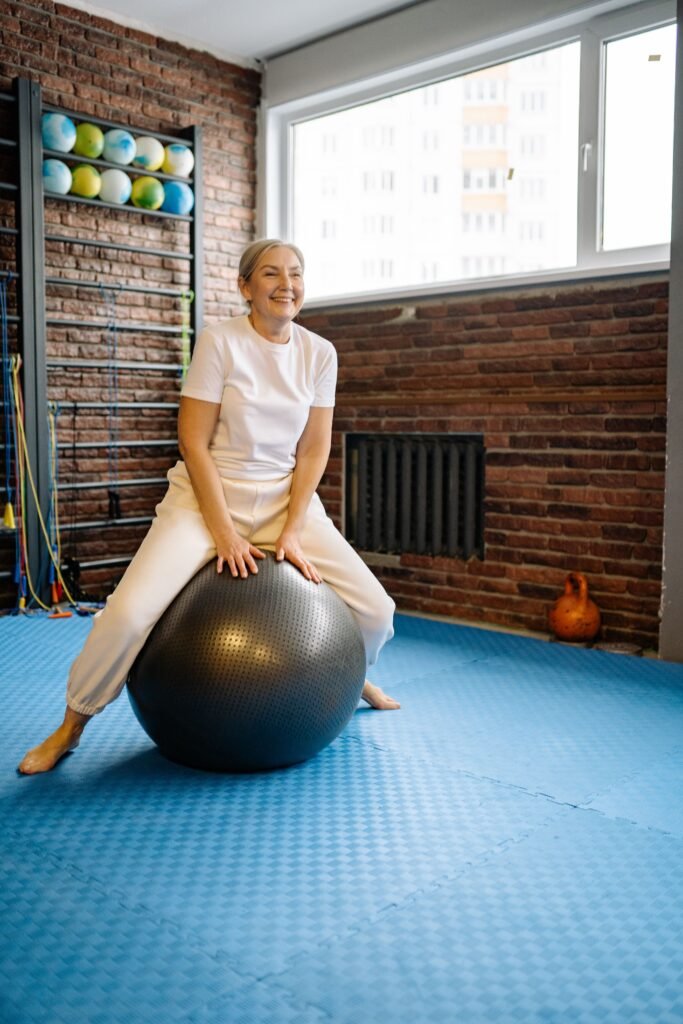
Why balance training works
The National Institute on Aging identifies balance as one of the four core types of exercise older adults need, alongside aerobic activity, strength training, and flexibility, and recommends about three sessions of balance-specific exercise a week. Balance isn’t just about the inner ear; it depends on leg strength, ankle stability, and how quickly the brain and muscles respond to small shifts in weight. All three of those things decline with inactivity and improve with practice, which is why balance exercises are one of the most effective, low-cost interventions for fall prevention available.
Before starting: safety comes first
A few ground rules make a real difference in how safely this goes:
Talk to your parent’s doctor or a physical therapist before starting any new exercise routine, especially if they already have weak balance, a recent fall history, or a condition that affects mobility. Always have a sturdy support nearby (a countertop, a heavy chair back, or a wall corner) within arm’s reach during standing exercises. Ideally, someone should be present the first several times your parent tries a new exercise, in case they need steadying. Stop immediately if there’s pain in the knees, back, or hips, and never use a chair with wheels or one that could slide.
The sit-to-stand exercise (builds the leg strength balance depends on)
This is one of the simplest and most effective exercises because it directly trains the muscles used every time someone gets up from a chair, a bed, or the toilet: arguably the single most common movement that leads to a fall when it goes wrong.
- Sit in a sturdy, stable chair with feet flat on the floor, hip-width apart.
- Lean slightly forward, shifting weight over the toes.
- Rise to standing by pushing through the legs and engaging the glutes: avoid using the hands to push off the chair if possible, though it’s fine to keep hands nearby for safety.
- Slowly lower back down to sitting, with control rather than dropping.
- Repeat 10 times, twice a day.
For an added challenge once this feels easy, holding light hand weights (or even household items like water bottles) adds resistance.
The standing balance series (trains stability directly)
This is a progression: start with the easiest version and only move to the next once the current one feels stable and comfortable.
- Feet shoulder-width apart, eyes open. Stand near a counter or sturdy chair back. Hold for 10-30 seconds.
- Feet together, eyes open. Same support nearby. Hold for 10-30 seconds.
- Standing on one foot, eyes open. Hold the support if needed at first; work toward just fingertips touching it, then no hands at all once stable. Hold for 10-30 seconds, then switch feet.
- Repeat all three with eyes closed, but only once your parent can do the eyes-open versions confidently and safely, since removing vision significantly increases difficulty.
Aim for five repetitions of each position, twice a day, always with support within reach.
Other balance-building activities worth considering
The NIA also points to several activities that build balance in a less structured, often more enjoyable way: tai chi, which research consistently shows reduces fall risk and is often described as “moving meditation” for how gentle and low-impact it is; yoga, particularly gentle or chair-based classes designed for older adults; the heel-to-toe walk (walking in a straight line placing the heel of one foot directly in front of the toes of the other); and simply walking backward or sideways for short distances along a hallway with a wall nearby for support. Many community centers, senior centers, and YMCAs offer tai chi or balance classes specifically designed for older adults, which adds a social component that pure home exercise doesn’t provide: worth looking into if your parent would enjoy the group setting.
How to actually get your parent to do this consistently
The exercises themselves are simple; the real challenge is usually building the habit. A few things that tend to help: tying the exercises to something already part of the daily routine (right after brushing teeth, or during commercial breaks while watching TV) works better than treating it as a separate scheduled activity. Doing the sit-to-stand exercise together, even a version, adds accountability and turns it into something shared rather than another task on a to-do list. Tracking progress (even something as simple as a checkmark on a calendar) gives a visible sense of consistency that pure repetition doesn’t provide on its own. And starting with real modesty about the goal (even 5 minutes a day, most days) beats an ambitious routine that gets abandoned after a week.
When to bring in a professional
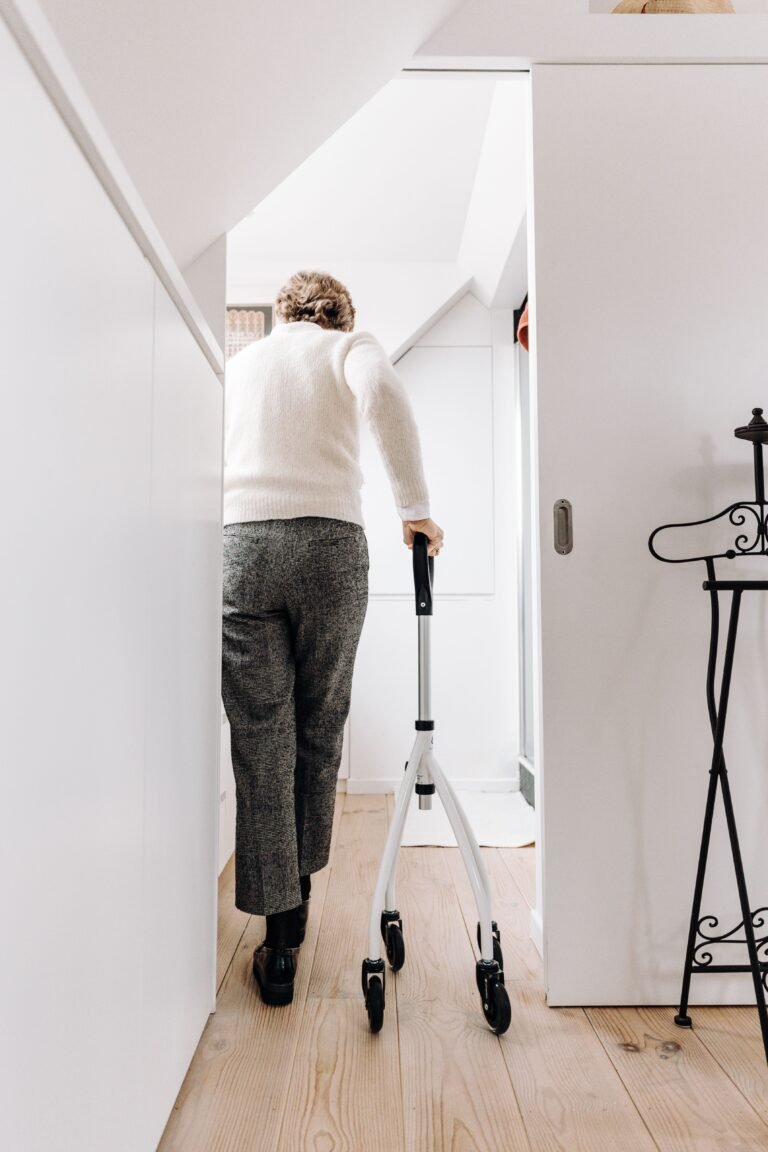
If your parent has already had a fall, has a diagnosed balance disorder, uses a mobility aid, or seems unsteady even with these basic movements, a physical therapist who specializes in fall prevention (sometimes called vestibular or balance therapy) can build a personalized program and correct form in ways a general guide like this one can’t. Many Medicare plans cover physical therapy evaluations for fall risk, and it’s worth asking their doctor for a referral rather than relying solely on self-directed exercise if there’s already a documented fall history.
Sources: National Institute on Aging: Three Types of Exercise, Johns Hopkins Medicine: Fall Prevention Exercises, CDC: Older Adult Falls Facts





2 Comments