Stairlifts: Types, Real Costs, and How to Choose One
As an Amazon Associate, I earn from qualifying purchases.
If your parent lives in a multi-level home and stairs have become a genuine fall risk or a source of daily struggle, a stairlift is one of the more effective (if not the cheapest) home modifications available. Understanding what actually drives the price and what options exist can save you from either overpaying or dismissing a stairlift as unaffordable when a more budget-friendly version might actually work.
What type of stairlift is cheapest?
A straight stairlift is the cheapest type, because it uses a standard rail instead of one built to measure. New straight models usually cost about $2,000 to $9,000 installed, with an average of around $7,000. Curved stairlifts are the most expensive, often $10,000 or more, because every rail is custom-made for the staircase.
If you want to spend as little as possible, there are two cheaper routes. A reconditioned straight stairlift from a reputable dealer often costs $1,500 to $3,000. And if your parent only needs it for a few months, for example after surgery, renting runs about $300 to $500 a month plus installation and removal fees. Both options are explained in more detail below.
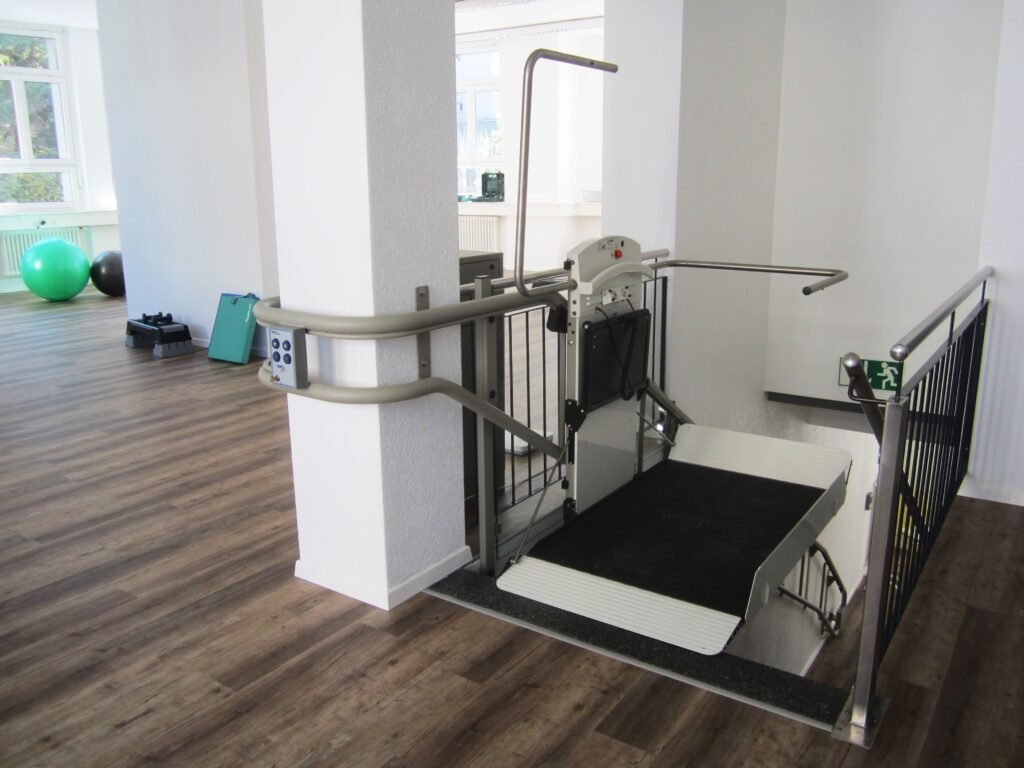
A reconditioned straight stairlift, inspected and certified by a dealer, often costs $1,500 to $3,000, far less than a new one.
The two main types, and why the price difference is so large
Straight stairlifts are built for a staircase with no turns, landings, or curves: just a simple straight run. Because they use a standard, mass-manufactured rail, they’re the more affordable option, generally running $2,500 to $9,000 including the unit itself.
Curved stairlifts are custom-built for staircases with bends, turns, or landings: which describes a lot of homes, especially older or multi-story houses. Because each curved rail has to be individually measured and fabricated to match the exact staircase, costs run considerably higher: roughly $10,000 to $25,000, according to Angi’s 2026 cost data. If your parent’s staircase has any curve or landing at all, budget for this category rather than assuming the straight-stairlift pricing applies.
What else affects the price
Beyond the basic straight/curved distinction, a few other factors move the price up: safety and convenience features like a power swivel seat (which rotates automatically at the top of the stairs for safer exit), automatic folding rails, and obstruction sensors typically add $750 to $2,500. An outdoor stairlift, if your parent needs one for exterior steps, requires weather-resistant materials and construction and runs considerably more: $5,000 to $15,000. Heavier weight capacity models add another $500 to $2,000. And staircase complexity itself (a longer track, a tighter curve, multiple landings) increases both material and labor costs on top of the base curved-lift pricing.
An added stair handrail can help in the meantime: check the current price on Amazon →
New vs. reconditioned: a real way to cut costs
This is worth knowing if cost is the main barrier: reconditioned (refurbished) stairlifts, inspected and certified by reputable dealers before resale, often cost $1,500 to $3,000 for a straight model, a meaningful discount compared to new units. If your parent’s mobility need is expected to be temporary (recovering from surgery or a fall, for example, rather than a permanent condition) a rental option also exists, generally $300 to $500 per month, which can make far more financial sense than purchasing outright for a short-term need.
Installation
Installation is often included in a dealer’s quote; when it’s billed separately, it usually adds about 15–20% to the total, and takes about 3-4 hours for a straight stairlift, though a curved installation is more involved and often takes a full day. Installing new electrical outlets, if the staircase doesn’t already have power nearby, may require hiring an electrician separately at $50-$100 per hour. While DIY installation kits exist for straight stairlifts, professional installation is worth the added cost for something your parent’s daily safety depends on: ensuring it’s properly secured, calibrated, and compliant with safety standards isn’t the place to cut corners.
Does Medicare help pay for this?
Unfortunately, no: Medicare Parts A and B, along with most Medigap plans, do not cover stairlifts, since they’re not classified as durable medical equipment the way a wheelchair or hospital bed is. Some Medicare Advantage plans have started offering limited assistance for home modifications that support health maintenance, so it’s worth checking your parent’s specific plan directly rather than assuming coverage doesn’t exist at all. Beyond Medicare, a few other paths can help with cost: monthly financing plans through third-party lenders like Affirm or CareCredit spread the cost over 3 to 36 months, many stairlift dealers offer direct financing with promotional 0% APR periods, VA grants are available for qualifying veterans, and some state assistance programs and nonprofit organizations specifically help cover home modification costs for older adults: worth asking your local Area Agency on Aging about directly. A stairlift may also qualify as a deductible medical expense on taxes if prescribed or recommended for a documented medical condition, though this depends on individual circumstances and is worth confirming with a tax professional.
How to actually decide what to get
Start with an honest assessment of the actual staircase: is it straight, or does it curve or have a landing? That answer alone determines which cost bracket you’re working with before any features get added. From there, weigh how permanent the need is: a genuine, ongoing mobility limitation justifies investing in a well-featured new or reconditioned unit, while a temporary post-surgery or post-fall recovery period might be better served by renting. And resist the pressure to add every available feature: a power swivel seat and obstruction sensors add real safety value, but extras beyond that should be evaluated against your parent’s actual daily use, not just added because they’re available.
Sources: Retirement Living: How Much Do Stair Lifts Cost?, Angi: How Much Does a Stair Lift Cost?