
Walk-In Tubs vs. Walk-In Showers: Which One Makes Sense for Your Parent?
As an Amazon Associate, I earn from qualifying purchases.
If bathroom safety came up while you were working through our home safety checklist, you’ve probably run into the same question a lot of families face next: do you replace the bathtub with a walk-in tub, or convert it to a walk-in shower? They solve the same core problem (a high tub wall that’s genuinely dangerous to step over) but they’re different products for different situations, and the wrong choice can mean spending thousands of dollars on something your parent barely uses.
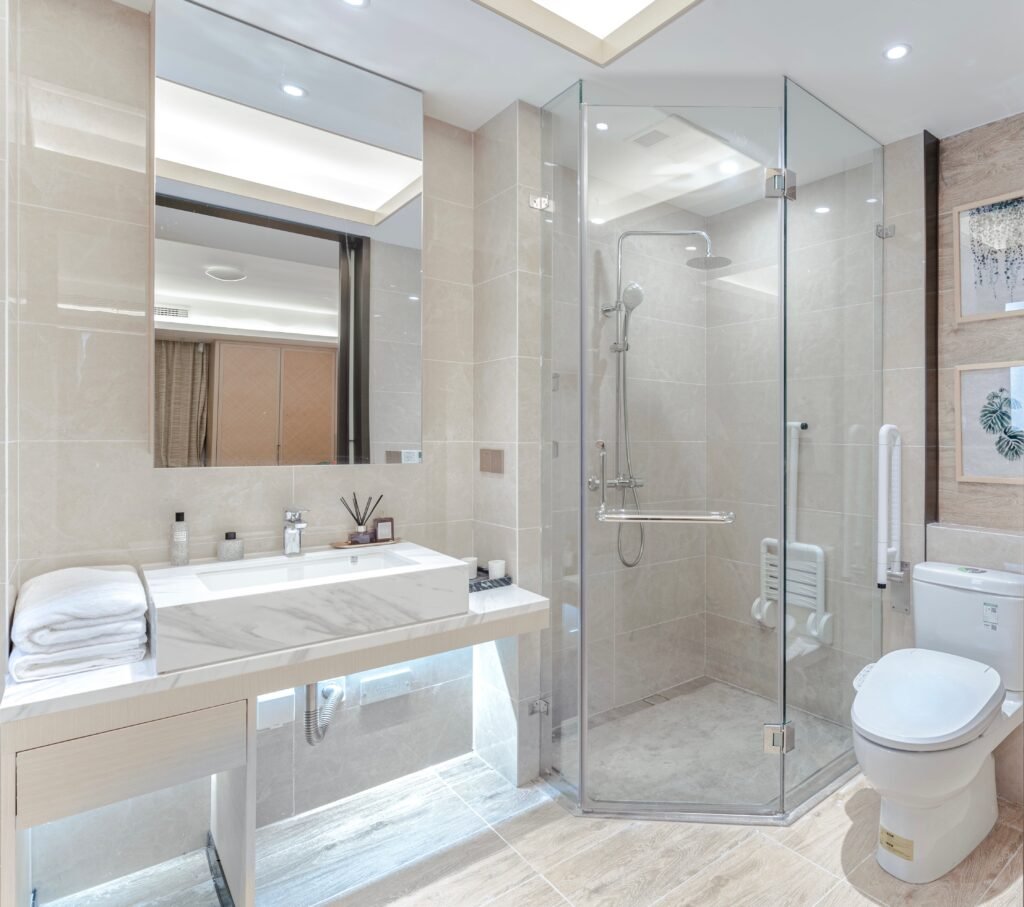
About 68% of all bathroom injuries happen in or around the tub or shower, according to the CDC
Why this matters more than it might seem
According to a CDC report on bathroom injuries, roughly 68% of all bathroom injuries happen in or around the tub or shower, and the injury rate in that specific area climbs sharply with age, reaching about 200 per 100,000 people among those 85 and older. The report also found that bathing, showering, and simply exiting the tub or shower caused around 37% of all bathroom injuries in the study, which covered everyone aged 15 and older. In plain terms: the physical act of stepping over a tub wall is one of the more dangerous routine moments in a lot of older adults’ daily lives, and it’s also one of the most fixable.
Walk-in showers: the simpler, cheaper option
A walk-in shower replaces the tub entirely with a low- or zero-threshold shower enclosure: no wall to step over at all. It typically includes a built-in or fold-down seat, grab bars, a handheld showerhead, and slip-resistant flooring.
What it’s good at: it’s the more space-efficient, lower-maintenance, lower-water-usage option, and because it often fits into an existing tub/shower footprint, installation tends to be simpler and cheaper than a full walk-in tub. It’s generally the better fit for a parent who’s still reasonably steady on their feet, prefers quick showers over baths, and mainly needs the fall risk from stepping over a tub wall eliminated.
What it’s not good at: if your parent actually enjoys or relies on soaking baths (including for joint pain, arthritis, or general relaxation) a shower simply doesn’t replace that. It’s also worth knowing that removing the only tub in a home can affect resale value down the line, since some buyers specifically look for at least one tub in a house.
Walk-in tubs: more expensive, but built for higher support needs
A walk-in tub has a door built into the side, so your parent steps over a much lower threshold (a few inches, rather than the 12-18+ inches of a standard tub) and then sits down on a built-in seat while the tub fills and drains around them. Many models add hydrotherapy jets, heated seating, and fast-drain technology.
What it’s good at: it’s the better option for a parent with more significant mobility limitations, balance concerns, or joint pain who benefits from seated, supported bathing and actually wants the therapeutic soaking a shower can’t provide. The built-in seat, grab bars, and low entry threshold specifically address the tub-related fall risks the CDC data points to.
What it’s not good at: cost is the big one: walk-in tubs run meaningfully higher than showers, generally landing around $15,000 total installed once you include equipment and labor, and up to $25,000+ for premium two-person or full-hydrotherapy models. They also use more water per bathing session (raising utility costs), and (this surprises a lot of families) your parent has to sit inside the empty tub while it fills and wait inside it while it drains, which means several minutes each way sitting without water, something worth actually discussing with your parent before committing to this option rather than assuming it’s obviously better because it costs more.
What actually drives the price
If a walk-in tub is the right fit, cost varies widely based on a few specific factors: basic soaker models start around $2,300–$5,000, mid-range hydrotherapy or air-jet models run $5,000–$10,000, and bariatric or two-person luxury models can reach $15,000–$25,000. On top of the tub itself, professional installation typically adds $2,500–$8,000, more if the bathroom needs structural changes rather than a straightforward retrofit into the existing space. Brand matters too: expect roughly $2,000–$8,000 for budget brands, $4,000–$11,000 for mid-tier options, and $8,500–$25,000+ for premium brands.
A tub transfer bench can help in the meantime: check the current price on Amazon →
Does insurance or Medicare help pay for either one?
This is worth knowing before you get attached to a specific option: Medicare does not cover walk-in tubs or shower conversions. Medicaid coverage varies significantly by state, and VA benefits may apply with proper medical documentation if your parent is a veteran. A tax deduction may be available if the modification is prescribed by a physician as medically necessary: worth asking a tax professional about specifically. Some states also offer low-interest or 0% financing programs for home modifications for seniors, and it’s worth checking with your state’s Area Agency on Aging or a USDA Rural Development office about grants or loans if cost is a barrier, particularly in a rural area.
How to actually decide
Rather than starting from price or features, start from your parent’s actual daily habits and physical condition. If they already prefer quick showers, are reasonably steady, and the main goal is just removing tub-wall fall risk, a walk-in shower solves the problem for meaningfully less money. If they have real balance or mobility limitations, rely on seated support, or would genuinely use hydrotherapy for pain relief, the higher cost of a walk-in tub may be worth it, but talk through the sit-and-wait-while-it-fills reality with them first, since that’s the part people are least prepared for after installation.
Whichever option you choose, treat it as one part of a broader bathroom safety review rather than the whole fix: grab bars, non-slip flooring, and adequate lighting matter regardless of which one you install, and are worth addressing at the same time if you haven’t already.
Sources: Retirement Living: Walk-In Shower vs. Walk-In Tub, Retirement Living: How Much Does a Walk-In Tub Cost?, CDC: Nonfatal Bathroom Injuries Among Persons Aged ≥15 Years, CDC MMWR: Nonfatal Bathroom Injuries






One Comment